
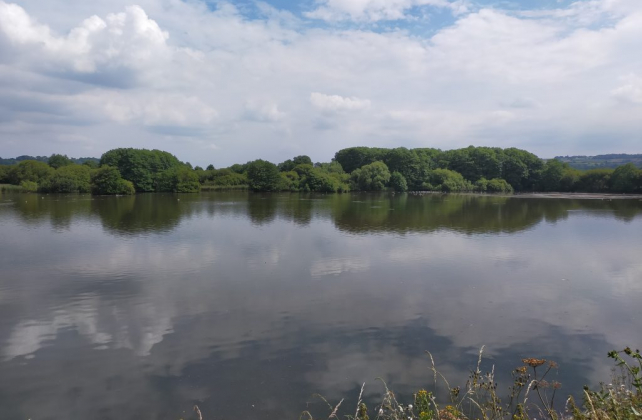
Chew Valley Lake is the largest artificial freshwater lake in South West England. It was created back in the early 1950s by Bristol Water as a reservoir for the expanding population of Bristol. Today, Chew Valley Lake is home to a host of wildlife. There is always something flying, fluttering or scuttling about.
A visit to Chew Valley Lake is highly recommended. It’s a place suitable for all ages. You can enjoy nature trails, picnic and play areas and beautiful views. There is also somewhere to grab a bite to eat.
Chew valley lake – directions
Chew Valley Lake is around 8 miles south of Bristol, on the Northern edge of the Mendip Hills, an Area of Outstanding Natural Beauty. The A368 dissects Chew Valley Lake and Herriott’s Pool. There is a lay-by on each side of the A368 but you are far better off using one of the car parks closer to the lake.
Chew valley lake car parks & trails
There are two good size car parks on the western side of the lake, both have toilets close by. The car parks are situated by picnic area 1 and picnic area 2. Picnic area 2 is closer to the nature trails. Here, the cost of daily parking is a couple of pounds and it’s free after 6pm. From this car park you can walk through the woods on a winding circular tarmac path. It’s a great route for bikes, pushchairs and wheelchairs.
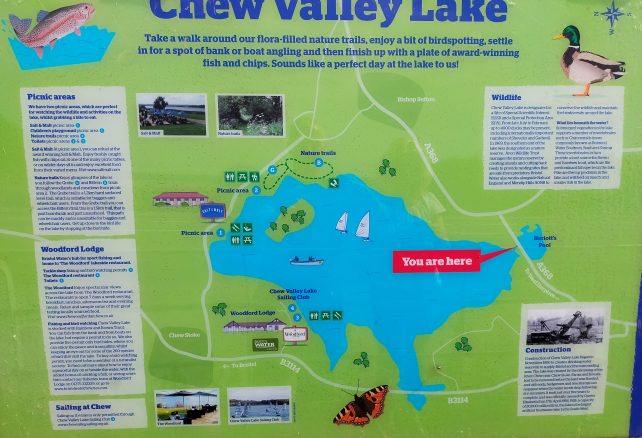
The first path is the Grebe trail. It meanders for 1.2km and allows you to catch glimpses of the lake. The Grebe trail meets up with the circular Bittern trail. The Bittern trail is a little longer (1.5km) and as parts of this aren’t paved it can get muddy. There is also a hide for bird watching. In early summer, there are numerous dragonfly buzzing in and out of the long grass and reed beds.
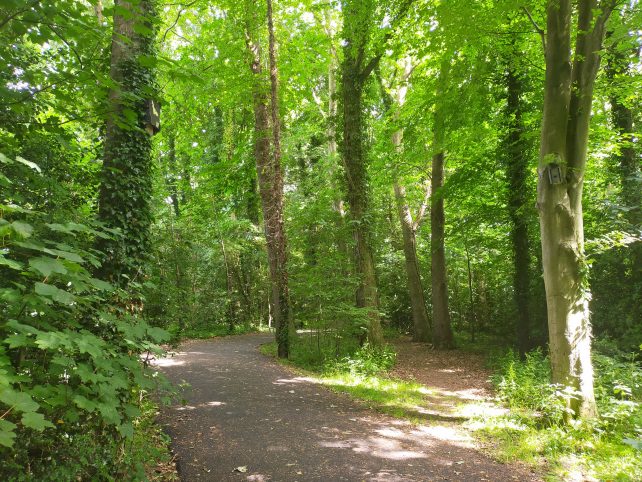
The Grebe trail
From these trails it’s easy to walk on to picnic area 1. There is another car park here plus a fish & chip shop and play area.
If you’re feeling fit (or just need to wear the kids out) keep on walking / cycling beyond the car park. You will soon join up with a path which leads to a main road – there is pavement. The views across the lake are lovely. Look out for the plaque which marks the inauguration of Chew Valley Lake by Queen Elizabeth II and the Duke of Edinburgh on 17 April 1956.
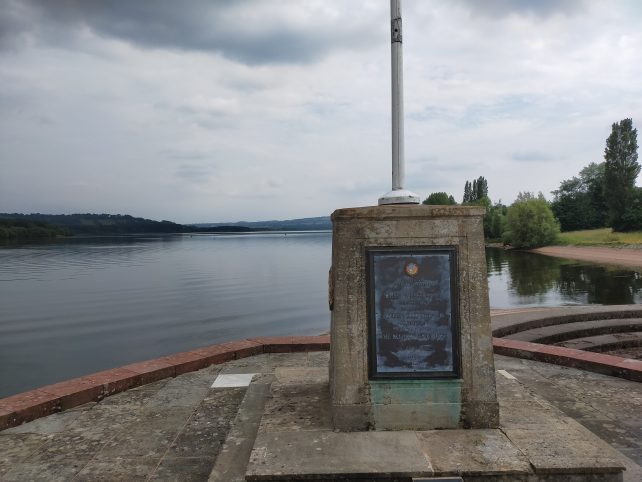
The inauguration plaque
Woodford Lodge & the sailing club
Once you’ve crossed over the lake, bear left. There’s a clearly sign posted tarmac path which leads towards Woodford Lodge and Chew Valley Sailing Club. It’s worth remembering that sailing is only permitted on the lake via the club. The Chew Lake Association of Disabled Sailors‘ charity sail here most Saturdays from April until the beginning of October. They always appreciate volunteers, so if you fancy helping out, do get in touch.
Keep following the path and you will arrive at The Woodford. The views across Chew Valley Lake from here are stunning. Stop and have a drink or a bite to eat at one of the outside tables. A breather might be a good idea. If you have managed to walk all the way from picnic area 2 it’s just under 3km.
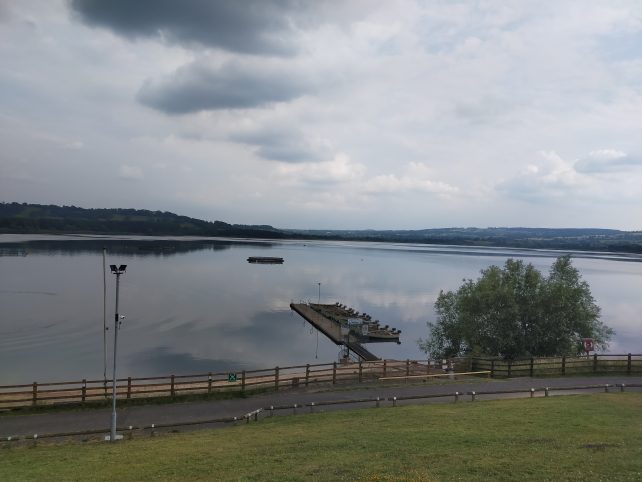
Chew valley lake – wildlife
There really is an abundance of flora and fauna at Chew Valley Lake. It’s home to insects such as butterflies, damselflies and dragonflies and the lake has around 350,000 trout in it!
The lake is also home to some huge pike. A visitor from Manchester landed a monster 47lb 5oz pike breaking the British record in the process. If you fancy booking a fishing slot at Chew Valley Lake you might need to be patient as slots can get booked up weeks in advance.
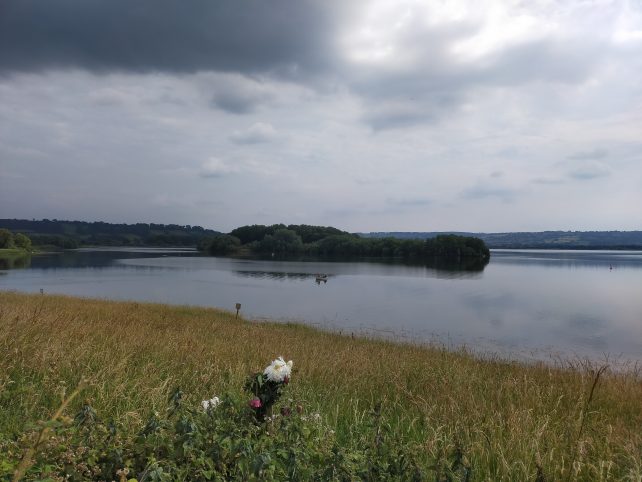
Fishing on the lake
Keen birdwatchers should have plenty to see. According to Bristol Water, around 260 species of bird visit the lake each year. Chew Valley Lake provides a sanctuary for the American wader, cormorant, gadwall, great crested grebe, hobby and osprey.
the hidden past
To create the lake, the river Chew was dammed near Chew Stoke. Houses and farms were removed before the area was flooded. During particularly dry summers, the receding water level reveals old roads and hedgerows. A real glimpse of the past. When it’s full, the lake holds around 20,000 million litres of water!
The South West’s largest artificial freshwater lake is well worth a visit.
Enjoy the great outdoors? Love nature? Then find out more about; Birdwatching in Somerset, Tarr Steps, Ebbor Gorge, Porlock Weir, Dunkery Beacon and Dunster.